Road to Revival
Beyond The Music
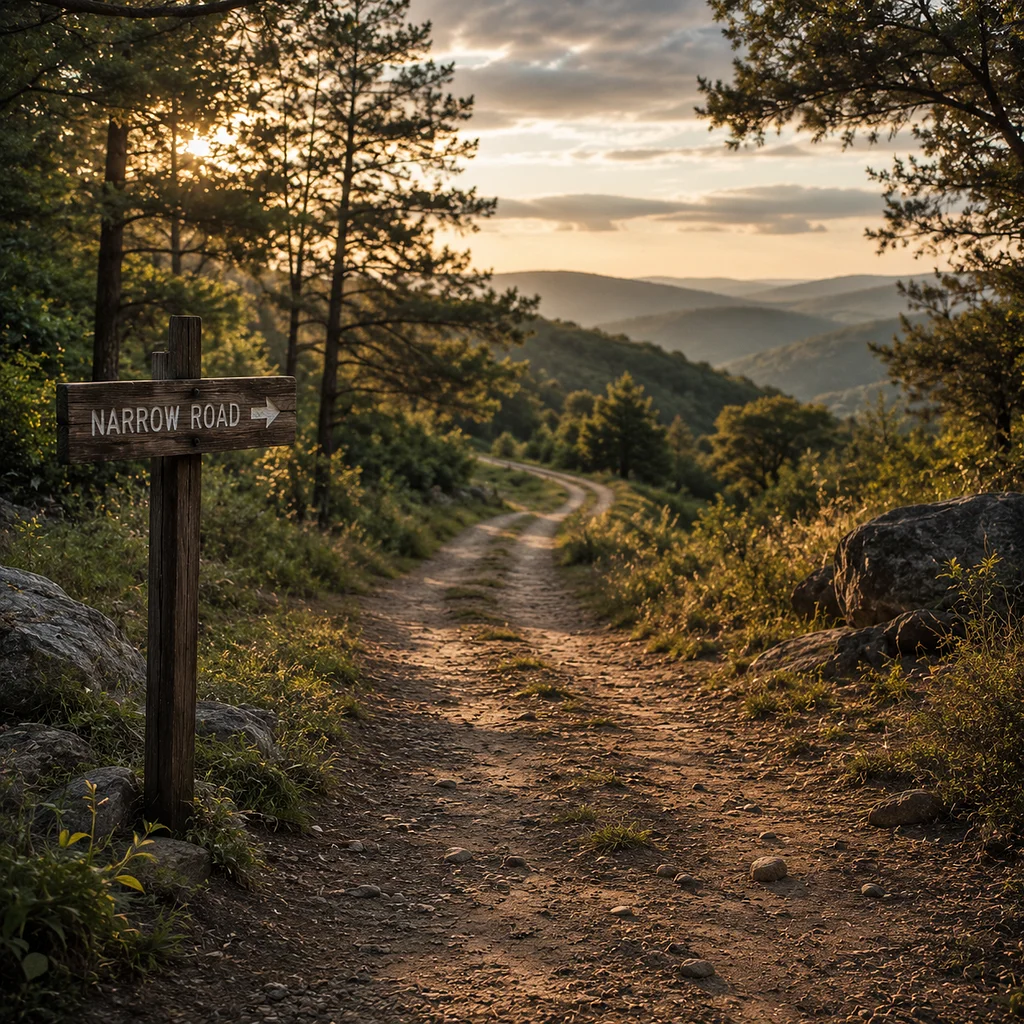
TRAILHEAD — Setting Out
The Road to Revival
There's a road which runs under every one of these seventeen songs — the same road, walked from seventeen different places.
Revival didn't start as a record. It started as an honest look at a life that needed a reminder. Somewhere between the writing and the recording, the songs found an order — not just a track list, but a path. An invitation, first. Then a turning. Then the weight of the cross. Then what comes after.
This is that road, laid out one stop at a time. You don't need to have heard the songs to walk it, and you don't need to walk it all at once. Come as you are, take it a stop at a time, and let the road do what roads do — get you somewhere you weren't when you started.
Four movements. Seventeen stops. One destination.
Let's go.
[Begin the Road →]

MOVEMENT I — The Invitation
Every road starts with an invitation, not a demand. Before anything is asked of you, something is offered: rest, presence, a way home. The first three stops aren't about what you need to fix — they're about the voice that's already calling you toward something better than where you've been standing.
Three stops. Come and see.
Stop 1: The Narrow Road →
Stop 1: The Narrow Road
📖 Scripture
"Because strait is the gate, and narrow is the way, which leadeth unto life, and few there be that find it." — Matthew 7:14 KJV
📖 Beyond the Music
There's a version of this life that looks easier. Wider road, softer edges, more company along the way. And there's a version that costs more up front but somehow ends up costing less in the end.
This song isn't about earning a harder path to prove something to God. It's about a road that started narrowing the moment you stopped needing to carry everything yourself. The verses tell it plainly — the broad way promises happiness and delivers a shortcut. The narrow way asks you to let go, and somewhere in the letting go, the heart that felt like it was losing room actually starts to grow wide.
That paradox isn't unique to this song — it's at the center of what Jesus actually taught. "For whosoever will save his life shall lose it: and whosoever will lose his life for my sake shall find it" (Matthew 16:25). It's not a passing line He said once. It shows up again in Mark 8:35¹ and once more in Luke 9:24², which tells you this wasn't one memorable phrase among many — it was central enough to repeat.
That's the trade this song is describing. Not less life. Less weight.
The road doesn't get easier because you're stronger. It gets easier because you're not carrying it alone anymore.
None of this makes the narrow road easier to choose. It just makes it worth choosing — because the point was never how steep the climb was, but who you became by walking it beside Him.
Footnotes
¹ "For whosoever will save his life shall lose it; but whosoever shall lose his life for my sake and the gospel's, the same shall save it." — Mark 8:35 KJV
² "For whosoever will save his life shall lose it: but whosoever will lose his life for my sake, the same shall save it." — Luke 9:24 KJV
🤔 Reflection
What are you still carrying on your own that was never meant to be carried alone?
🙏 Today's Prayer
Lord, You already know how much I've tried to manage on my own — the wide road, the shortcuts, the easier version of this life I keep reaching for. Teach me what it means to let go and walk beside You instead of ahead of You. Make the narrow road feel less like a loss and more like the freedom it actually is. In Jesus' name, amen.
✅ Today's Challenge
Name one thing you're carrying today that you haven't handed over. Say it out loud — to God, or to someone you trust — before the day ends.
📖 Journal Prompt
What's one "wide road" you had to walk away from to find something better?
🛤️ Stop 1 of 17 · Movement I: The Invitation Next on the road: Revival →
Stop 2: Revival
📖 Scripture
"Wilt thou not revive us again: that thy people may rejoice in thee?" — Psalm 85:6 KJV
📖 Beyond the Music
Scripture shows a consistent pattern to revival, whether it takes hold of a group all at once or begins with a single person and spreads: conviction, then repentance, then a return to God and His word, which snowballs into action — and then revival breaks out. In every case, it starts with a willingness to be searched. Even where revival breaks out on a mass scale, each person within it still had to be vulnerable before God, receptive to His message, and obedient to His calling.
David didn't pray, "renew Your people" — he prayed, "Create in me a clean heart, O God; and renew a right spirit within me" (Psalm 51:10). This song lands in that same place. It's not wrong to pray for revival to sweep through a church, a family, a nation — those are good prayers. But this one catches itself mid-request and turns the lens around: "Before the world can see My light, let Me revive your life."
This makes perfect sense. How does God share Himself with the world? Through us. "Let your light so shine before men, that they may see your good works, and glorify your Father which is in heaven" (Matthew 5:16). Scripture returns to this again and again too — Ephesians 2:10¹, 2 Corinthians 5:20-21², 1 Peter 2:12³, 1 Peter 2:15-16⁴. Over and over, we're told that we are God's representatives on earth, whether we accept it or not. Our example isn't our own — it's His. It's a heavy burden to carry, but lighter than the weight of the cross.
That's not guilt. It's an access point. You were never given authority to renew anyone else's heart — but you do have standing access to your own, and Scripture keeps circling back to that as the actual starting place for change: "Be not conformed to this world: but be ye transformed by the renewing of your mind" (Romans 12:2). It's not an isolated command — Scripture repeats it enough that it's hard to call incidental: Ezekiel 36:26⁵, Ephesians 4:23-24⁶.
The song's sharpest insight, though, is about what counterfeit revival looks like — not rebellion, but coasting. "I've kept the embers glowing, enough to see me through... faithful living while giving nothing new." That's not a cold heart. It's a warm one that's stopped growing, and Scripture treats that as an ongoing condition to work against rather than a one-time fix: "Though our outward man perish, yet the inward man is renewed day by day" (2 Corinthians 4:16), and describes that renewal as a continuing process rather than a finished one elsewhere too: "Have put on the new man, which is renewed in knowledge after the image of him that created him" (Colossians 3:10). Renewal isn't an event you coast on afterward. It's something we have to choose daily.
Which is what the song refuses to let you miss at the end: "Not because we've wandered far, but because we want to stay." This isn't rescue for people who've drifted. It's the daily decision of people who are already close and want to stay that way — which might describe you more than the word "revival" usually suggests.
Ultimately, we don't pursue revival, renewal of spirit, or closeness to God out of sheer obedience — any more than we breathe on command. We pursue it because it's the point of being Christian: to be Christ-like, to show our gratitude for His sacrifice by continuing His mission, in His way. He set the example for us, both to live by and to hold out for the rest of the world to see. We can't let His love, mercy, and grace flow through us until we've let them fill us first.
Footnotes
¹ "For we are his workmanship, created in Christ Jesus unto good works, which God hath before ordained that we should walk in them." — Ephesians 2:10 KJV
² "Now then we are ambassadors for Christ, as though God did beseech you by us: we pray you in Christ's stead, be ye reconciled to God. For he hath made him to be sin for us, who knew no sin; that we might be made the righteousness of God in him." — 2 Corinthians 5:20-21 KJV
³ "Having your conversation honest among the Gentiles: that, whereas they speak against you as evildoers, they may by your good works, which they shall behold, glorify God in the day of visitation." — 1 Peter 2:12 KJV
⁴ "For so is the will of God, that with well doing ye may put to silence the ignorance of foolish men: As free, and not using your liberty for a cloke of maliciousness, but as the servants of God." — 1 Peter 2:15-16 KJV
⁵ "A new heart also will I give you, and a new spirit will I put within you: and I will take away the stony heart out of your flesh, and I will give you an heart of flesh." — Ezekiel 36:26 KJV
⁶ "And be renewed in the spirit of your mind; And that ye put on the new man, which after God is created in righteousness and true holiness." — Ephesians 4:23-24 KJV
🤔 Reflection
In the things that you have prayed for, where is there room to ask God to start with yourself?
🙏 Today's Prayer
Lord, please help me to renew the flame within my soul, that I may be closer to You and better aligned to Your will. Help me be a better servant, Lord. Please let me remember to put You and Your will first. Open my heart and fill it with Your grace, that I may then share it with the world. All things in Jesus' name, amen.
✅ Today's Challenge
Before you pray for anyone or anything else today, ask God to start with you. Name one specific comfort that's been keeping the flame "warm" instead of tended.
📖 Journal Prompt
What does it actually look like, in your everyday life, for revival to "start with you"?
🛤️ Stop 2 of 17 · Movement I: The Invitation Next on the road: When Mercy Calls →
Stop 3: When Mercy Calls
📖 Scripture
"…and after the fire a still small voice." — 1 Kings 19:12 KJV
📖 Beyond the Music
We tend to assume God's most important moments announce themselves loudly — a vision, a voice from the sky, something undeniable. Scripture keeps surprising us with the opposite. Elijah, exhausted and hiding in a cave, watched a wind tear the mountains apart, then an earthquake, then a fire — and "the LORD was not in the wind... not in the earthquake... not in the fire" (1 Kings 19:11-12). God was in what came after: a still small voice. This song puts you in that same cave: "It wasn't in the thunder. It wasn't in the flame. It wasn't in the mighty wind… but something spoke my name."
That quiet has a specific character to it, too — it doesn't lead with what you've done wrong. "Not condemning where I'd wandered, not reminding where I'd been… only whispering, 'Come closer.'" That's not a softened version of the truth. It's the actual shape of it: "God sent not his Son into the world to condemn the world; but that the world through him might be saved" (John 3:17). The same grace that met you here once met Jesus' harshest accusers the same way — "neither do I condemn thee: go, and sin no more" (John 8:11)¹ — and Paul later put it as a settled fact rather than a hope: "there is therefore now no condemnation to them which are in Christ Jesus" (Romans 8:1)².
Verse two names something even more specific than forgiveness — a renewal that doesn't wait for you to earn a clean slate first: "Your grace has never counted all the times I've turned away… it just meets me every morning, it's made new again each day." That's almost a direct echo of "it is of the LORD's mercies that we are not consumed... they are new every morning: great is thy faithfulness" (Lamentations 3:22-23), and of David's own description of God's patience: "He will not always chide: neither will he keep his anger for ever. He hath not dealt with us after our sins" (Psalm 103:8-10). Mercy in this song isn't a single rescue you look back on. It's a supply that refills before you've asked.
And the song won't let the reach of that mercy have a limit, either. "None have ever been so lost that mercy couldn't call." Paul makes the same claim about timing, not just distance: "While we were yet sinners, Christ died for us" (Romans 5:8), and elsewhere pushes the timing back further still — "God, who is rich in mercy, for his great love wherewith he loved us, even when we were dead in sins, hath quickened us together with Christ" (Ephesians 2:4-5). The call didn't wait for you to turn around first. It came looking.
That's what makes the outro more than a nice closing line. "Tomorrow, if I wander, I'll still hear the same voice, calling my name." Mercy here isn't a door that closes once you've walked through it. It's a voice that keeps calling — quietly, patiently, every day you're given — because this was never about your track record. It was about His.
Footnotes
¹ "She said, No man, Lord. And Jesus said unto her, Neither do I condemn thee: go, and sin no more." — John 8:11 KJV
² "There is therefore now no condemnation to them which are in Christ Jesus, who walk not after the flesh, but after the Spirit." — Romans 8:1 KJV
🤔 Reflection Where in your life might you be assuming mercy has a limit it doesn't actually have?
🙏 Today's Prayer
Lord, thank You for meeting me every morning, even on the days I've turned away. Help me recognize Your voice not in the noise I expect, but in the quiet I too often rush past. Where I've believed I've wandered too far, remind me Your mercy has never once stopped calling my name. Teach me to come closer, today and every day after. In Jesus' name, amen.
✅ Today's Challenge
Sit in silence for five minutes today. No requests — just listening for the whisper.
📖 Journal Prompt
Where do you most often hear God's voice — in the noise, or in the quiet?
🛤️ Stop 3 of 17 · Movement I: The Invitation Next on the road: Whitewashed Walls →
MOVEMENT II — The Turning
If the first movement was an invitation, this one is what happens when you actually answer it — the turning, not away from God but toward what He's already seeing in you. It's honest before it's comfortable. Five stops, moving from what needs to come down to what starts to grow in its place.
Five stops. Let the turning happen.
Stop 4: Whitewashed Walls →
Stop 4: Whitewashed Walls
📖 Scripture
"…ye are like unto whited sepulchres, which appear beautiful outward…" — Matthew 23:27 KJV
📖 Beyond the Music
Jesus reserved some of His sharpest words not for outsiders, but for people who looked the most obviously faithful: "Ye are like unto whited sepulchres, which indeed appear beautiful outward, but are within full of dead men's bones" (Matthew 23:27). That's not a verse about hypocrites in general — it's a verse about religious performance specifically, the kind that gets better at looking right the longer it avoids being right. This song opens in exactly that condition: "We learned to paint the broken places till no one saw the cracks."
The cost of that painting isn't abstract — the song names it directly: "While love stood knocking at the door, our hearts had fallen asleep." That's almost word for word an older image: "Behold, I stand at the door, and knock: if any man hear my voice, and open the door, I will come in to him" (Revelation 3:20). The door was never locked from the outside. It's locked from the inside, by whoever's managing what gets seen.
Verse two gets specific about what a whitewashed faith actually sounds like — not silence, but noise: "To speak of grace with practiced words yet struggle to forgive... a hollow faith that fills the air with noise." Isaiah named the same gap centuries earlier: "This people draw near me with their mouth, and with their lips do honour me, but have removed their heart far from me" (Isaiah 29:13) — and Paul makes the identical charge in 2 Timothy 3:5¹. Words were never the problem Scripture is worried about. Distance is.
The bridge is the bravest moment in the song, because it asks for exactly what a whitewashed heart usually avoids: "Search me, Lord, beyond the surface... find the cracks I don't even know." That's almost a direct quote of David's own prayer: "Search me, O God, and know my heart: try me, and know my thoughts: and see if there be any wicked way in me" (Psalm 139:23-24). It's a dangerous prayer to actually mean, since it asks God to look past the parts you've already cleaned up for Him and go looking for the parts you haven't.
And the resolution isn't a nicer-looking wall — it's a different structure entirely: "Let my life become a window, where the light of Christ is seen… not a polished empty building, but a heart made clean." Paul uses the same architecture: "Know ye not that ye are the temple of God, and that the Spirit of God dwelleth in you?" (1 Corinthians 3:16), and describes believers together as "an holy temple in the Lord... an habitation of God through the Spirit" (Ephesians 2:21-22). A wall's job is to keep things out. A temple's job is to hold what's holy and let it be seen.
None of this is about becoming less careful with your faith — it's about making sure the care is going somewhere real. A wall that's never inspected doesn't stay standing forever; it just fails quietly, from the inside, while looking fine from the road.
Footnotes
¹ "Having a form of godliness, but denying the power thereof: from such turn away." — 2 Timothy 3:5 KJV
🤔 Reflection
Where might you be more practiced at managing the appearance of faith than tending to what's actually underneath?
🙏 Today's Prayer
Lord, search me beyond what I've already made presentable. Show me the rooms I've learned to keep dark, even from myself. I don't want a faith that only looks finished — I want a heart You can actually live in. Tear down whatever I've built to be seen instead of to be true, and build something real in its place. In Jesus' name, amen.
✅ Today's Challenge
Name one place where you've been keeping up appearances instead of being honest — with God, with someone else, or with yourself. Take one small step toward transparency there today.
📖 Journal Prompt
What's one place your life could be a window instead of a wall?
🛤️ Stop 4 of 17 · Movement II: The Turning Next on the road: Martha's Kitchen →
Stop 5: Martha's Kitchen
📖 Scripture
"Martha, Martha, thou art careful and troubled about many things…" — Luke 10:41 KJV
📖 Beyond the Music
The story behind this song doesn't end where the epigraph stops. Jesus' full answer to Martha continues: "But one thing is needful: and Mary hath chosen that good part, which shall not be taken away from her" (Luke 10:42). That's the whole tension in one sentence — not that serving was wrong, but that presence was the one thing being crowded out by it. This song puts you in Martha's kitchen at the exact moment that trade is happening: "The bread was nearly ready, the table almost set... while Heaven waited quietly in the next room with her friends."
The bridge is careful not to let you misread the story as a rebuke of service itself: "Martha wasn't wrong to bake the bread. She wasn't wrong to serve." That matters, because Scripture never treats service as the problem — Jesus Himself said He came "not to be ministered unto, but to minister" (Matthew 20:28)¹. The problem was never Martha's hands. It was what her hands had quietly started to replace.
Verse two brings the same trade into the present tense, and it's a sharper line than it first sounds: "When all my prayers become my plans, I work for You, but walk alone." That's possible to do entirely with good motives — "good work done in Your name" — and still end up distant, because activity and closeness were never the same currency. Jesus put it even more plainly to His disciples: "Abide in me, and I in you... for without me ye can do nothing" (John 15:4-5). The Psalmist said the same thing about labor generally: "Except the LORD build the house, they labour in vain that build it" (Psalm 127:1). Fruit was never described as something you produce by trying harder. It's what happens to a branch that stayed attached.
What the song asks for in the end isn't less work — it's the right order: "Teach me first to sit beside You, then go do the work You chose." Presence first, service flowing out of it rather than standing in for it. That's not a small distinction. A life can look identical from the outside — same tasks, same hours, same good intentions — and be running on two completely different fuels.
The outro says the quiet part loud: "Sometimes the best work isn't in the kitchen. It's at His feet." That's not a permanent instruction to stop cooking. It's a reminder that the work only means what it's supposed to mean when it flows from having actually sat there first.
Footnotes
¹ "Even as the Son of man came not to be ministered unto, but to minister, and to give his life a ransom for many." — Matthew 20:28 KJV
🤔 Reflection
Where might work done for God be quietly standing in for time spent with Him?
🙏 Today's Prayer
Lord, so much of what fills my days is good, even work I've done for You. But teach me not to mistake activity for closeness. Help me sit with You before I rush to serve You, and let whatever I do today grow out of time spent simply being near You. In Jesus' name, amen.
✅ Today's Challenge
Before your next task today — even a good one — stop for two minutes. Sit still. Be with God before you do anything for Him.
📖 Journal Prompt
What does "choosing His presence first" actually look like in your daily schedule?
🛤️ Stop 5 of 17 · Movement II: The Turning Next on the road: The Other Side of the Boat →
Stop 6: The Other Side Of The Boat
📖 Scripture
"Cast the net on the right side of the ship, and ye shall find." — John 21:6 KJV
📖 Beyond the Music
This isn't the first time Jesus tells someone to try again in the exact place they'd already failed. At the very start of Peter's calling, after a night of empty nets, Jesus told him to let down his nets one more time — and the catch was so large it nearly sank two boats (Luke 5:4-7). Now, after the resurrection, He does it again: same exhaustion, same empty nets, same voice from the shore. "Cast your net the other side." It's less a new miracle than Jesus proving He's still exactly who He was the first time He called them.
The size of the ask is worth noticing. Not a new plan, not a different sea — just the other side of the same boat. "One step past my own understanding, one more chance to hope." That's almost a picture of an old proverb: "Trust in the LORD with all thine heart; and lean not unto thine own understanding... and he shall direct thy paths" (Proverbs 3:5-6). Jeremiah drew the same contrast in sharper terms: "Cursed be the man that trusteth in man... blessed is the man that trusteth in the LORD" (Jeremiah 17:5, 7). The distance between nothing and everything, in this song, was one small step of trust past what already made sense.
The bridge names the part of obedience that's easy to underestimate: "Obedience may seem so small… until Heaven says it's time." Scripture doesn't treat small obedience as a lesser category of faith — "who hath despised the day of small things?" (Zechariah 4:10) — and Jesus made the same point about small faithfulness directly: "He that is faithful in that which is least is faithful also in much" (Luke 16:10). The smallness was never the measure of what God was about to do with it.
And the outro refuses to let the circumstances take credit for what happened: "The sea was never different… only the voice I chose to trust." Paul described the same posture as the whole shape of a Christian life: "We walk by faith, not by sight" (2 Corinthians 5:7) — the same substance the writer of Hebrews defined outright: "Faith is the substance of things hoped for, the evidence of things not seen" (Hebrews 11:1). The water genuinely didn't change. What changed was who they listened to.
🤔 Reflection
Where might God be asking you to try again — not somewhere new, but from a different side of what's already right in front of you?
🙏 Today's Prayer
Lord, when I've worked hard and still come up empty, help me listen for Your voice instead of trusting only in my own effort. Give me the willingness to try again in a way that doesn't make sense to me yet, simply because You asked. Let my trust in You, not my understanding of the outcome, be what carries me forward. In Jesus' name, amen.
✅ Today's Challenge
The next time an act of obedience feels too small to matter, do it anyway — and watch for what God does with it.
📖 Journal Prompt
When has a small act of obedience led to something bigger than you expected?
🛤️ Stop 6 of 17 · Movement II: The Turning Next on the road: A Chair →
Stop 7: A Chair
📖 Scripture
"…when he was yet a great way off, his father saw him." — Luke 15:20 KJV
📖 Beyond the Music
The chair in this song isn't one we set out for God. It's the one He's already set for us. The whole picture comes from a story Jesus told (which we know as the parable of the prodigal son) about a son who took his inheritance, left, and spent it all — and while he was still out there learning what he'd traded away, his father hadn't given up on him. He was watching the road. "When he was yet a great way off, his father saw him, and had compassion, and ran" (Luke 15:20). This song sets a chair at that same table and asks you to notice who's actually been doing the waiting.
Verse two names the exact fear that keeps a wanderer from turning around: "Ashamed to walk through His door, certain no one cared." That's precisely where the son in the parable landed too — he'd already rehearsed a speech asking only to come back as a servant, having decided he'd forfeited any right to be called a son (Luke 15:18-19). He never got to finish it. His father was already calling for a robe and a ring before the servant-request could land (Luke 15:22). The chorus answers that same fear directly: "No matter where you've wandered, no matter who you are, there's always room at Heaven's table."
The bridge makes sure you don't mistake that welcome for something you qualified for: "No one earns a place there. No one buys that seat." Paul says the same thing about grace generally: "By grace are ye saved through faith; and that not of yourselves: it is the gift of God: not of works, lest any man should boast" (Ephesians 2:8-9) — and says it again elsewhere in almost the same breath: "Not by works of righteousness which we have done, but according to his mercy he saved us" (Titus 3:5). The chair was never a reward for coming back clean. It was set before you left.
And the waiting itself isn't reluctant patience — it's active hope. "The Father's watching down the road, still hoping we'll return someday." Peter describes God's patience in exactly those terms: "The Lord is... longsuffering... not willing that any should perish, but that all should come to repentance" (2 Peter 3:9), and Ezekiel records God saying it in His own voice centuries earlier: "I have no pleasure in the death of the wicked; but that the wicked turn from his way and live" (Ezekiel 33:11). The delay was never disinterest. It was the door being kept open on purpose.
The outro puts the whole song in one image: "The light is in the window… the door is open wide… and beside the Father's table there's still a chair." Nothing in this song asks you to earn your way back to that light. It just asks you to walk toward it.
🤔 Reflection
Is there a part of you that's stayed away, believing you'd have to earn your way back before you could return?
🙏 Today's Prayer
Father, thank You for watching the road even when I've wandered far enough to believe I didn't deserve to come back. I don't want to stay away out of shame any longer. Help me believe that the chair You've kept for me was never something I had to earn. I'm coming home. In Jesus' name, amen.
✅ Today's Challenge
If there's a place you've kept your distance from God out of shame rather than actual conviction, take one step back toward Him today — even just naming it honestly in prayer.
📖 Journal Prompt
What's kept you standing at a distance, even when you knew the door was open?
🛤️ Stop 7 of 17 · Movement II: The Turning Next on the road: Bread on the Water →
Stop 8: Bread On The Water
📖 Scripture
"Cast thy bread upon the waters: for thou shalt find it after many days." — Ecclesiastes 11:1 KJV
📖 Beyond the Music
The disciples asked the obvious question first. When a boy came forward with five loaves and two small fish for a crowd of five thousand, the honest math was: "There is a lad here, which hath five barley loaves, and two small fishes: but what are they among so many?" (John 6:9). Five thousand people and five loaves isn't a problem faith is supposed to pretend doesn't exist — it's the exact math this song hands to God anyway. The boy's offering wasn't impressive. It was just available.
Jesus made the same point once with a much smaller gift and a much larger contrast. Watching wealthy worshippers give large, visible sums, He pointed instead to a poor widow's two coins and said she'd given more than any of them, "for all they did cast in of their abundance; but she of her want did cast in all that she had" (Mark 12:44). This song's chorus is built on that same math: "What looks small within your hands looks different through the Father's eyes." Size was never the measure God was using.
The bridge says plainly what actually qualifies an offering: "He never asked for riches. He never measured wealth. He simply blessed the willing heart that gave away itself." Paul names the same standard: "If there be first a willing mind, it is accepted according to that a man hath, and not according to that he hath not" (2 Corinthians 8:12), and describes exactly what that willingness looks like a chapter later: "God loveth a cheerful giver" (2 Corinthians 9:7). You were never asked to give what you don't have. Just what you do.
And the epigraph over this whole song is a promise about timing, not just generosity: "Cast thy bread upon the waters: for thou shalt find it after many days" (Ecclesiastes 11:1). The return isn't always visible the moment you give something up. Sometimes the multiplying happens somewhere you can't see yet — and the only part that was ever actually yours to control was whether you let go of it in the first place.
🤔 Reflection
What's the "little" you've been holding back because it doesn't feel like enough to offer?
🙏 Today's Prayer
Lord, I don't always believe what I have to offer is enough. Help me stop measuring my gifts by what they look like in my hands, and trust You with what they could become in Yours. Take what's small, what's ordinary, even what feels insufficient, and let it be enough because You're the one holding it. In Jesus' name, amen.
✅ Today's Challenge
Give something today that feels too small to matter — your time, your attention, an apology, an act of kindness — and trust God with what it becomes.
📖 Journal Prompt
What's a time something small you offered ended up mattering more than you expected?
🛤️ Stop 8 of 17 · Movement II: The Turning Next on the road: Thirty Pieces →
MOVEMENT III — The Passion
The road always leads here eventually — not around the cross, but through it. These three stops don't ask you to look away from what it cost. They ask you to stay.
Three stops. Stay a while.
Stop 9: Thirty Pieces →
Stop 9: Thirty Pieces
📖 Scripture
"…and they covenanted with him for thirty pieces of silver." — Matthew 26:15 KJV
📖 Beyond the Music
Judas walked beside Jesus every day, heard the truth firsthand, and still calculated that thirty pieces of silver were worth more than staying faithful (Matthew 26:14-16). It would be easy to file that away as a story about one uniquely bad man. This song won't let you: "Everybody's got their silver. Everybody names their price." That's a harder claim, and a more honest one — Scripture treats the pull to trade what's eternal for what's immediate as a universal condition, not a historical footnote: "The love of money is the root of all evil: which while some coveted after, they have erred from the faith" (1 Timothy 6:10). Jesus had already said it more directly still: "No man can serve two masters... ye cannot serve God and mammon" (Matthew 6:24).
Verse two makes clear the silver isn't always literal money — a house on a hill, glory, old bitterness, unreleased shame, kingdoms built to impress. "Anything I love more than You becomes my thirty pieces." That's the first commandment in modern clothing: "Thou shalt have no other gods before me" (Exodus 20:3). The currency changes. The trade doesn't.
The bridge names what the silver actually failed to do: "No treasure ever mends a soul or grants a heart release." Judas learned that faster than anyone — within a day, he tried to throw the coins back, calling the deal what it was: "I have betrayed the innocent blood" (Matthew 27:4). The silver never bought him a moment's peace. It cost him one.
Which is exactly the contrast this song is built on: "Mercy paid what silver couldn't." Peter draws the same line, almost word for word: "Ye were not redeemed with corruptible things, as silver and gold... but with the precious blood of Christ" (1 Peter 1:18-19), and Paul draws the natural conclusion from it: "Ye are bought with a price: therefore glorify God in your body, and in your spirit, which are God's" (1 Corinthians 6:20). Whatever you'd trade Him for was never going to be able to buy back what it cost.
🤔 Reflection
What's the "thirty pieces" you find yourself most tempted to trade Him for?
🙏 Today's Prayer
Lord, show me what I've been tempted to value above You — comfort, control, the approval of others, anything I've quietly decided is worth more than staying close to You. I don't want a peace that silver could buy, because I know now it isn't peace at all. Keep my heart from trading You for anything less than You. In Jesus' name, amen.
✅ Today's Challenge
Name honestly, even just to yourself, what your "thirty pieces" tend to be — and take one step today toward loving it less than you love Him.
📖 Journal Prompt
What does the world offer instead of Christ that has quietly cost you more than it delivered?
🛤️ Stop 9 of 17 · Movement III: The Passion Next on the road: Jesus Wept →
Stop 10: Jesus Wept
📖 Scripture
"Jesus wept." — John 11:35 KJV
📖 Beyond the Music
The phrase in the title is the shortest verse in the Bible — "Jesus wept" (John 11:35) — spoken at Lazarus's tomb, where Jesus grieved alongside Mary and Martha even though He was moments from raising their brother. But the song's opening verse draws from a different moment of weeping entirely: Jesus looking over Jerusalem and grieving not their loss, but their unbelief — "When he was come near, he beheld the city, and wept over it... because thou knewest not the time of thy visitation" (Luke 19:41, 44). Put together, the two moments say something this song leans on throughout: Christ weeps both with us in our sorrow and over us in our resistance — and this song draws on both intentionally, not by accident.
The rich young ruler is one specific picture of that second kind of grief. The song doesn't paint him as a villain — "the Master loved him still" — because that's exactly how Scripture tells it: "Then Jesus beholding him loved him" (Mark 10:21), even as the man walked away from everything he was offered. Being loved by Christ was never the same as choosing Him.
Verse two turns the lens from ancient Jerusalem to the modern church, and it doesn't go easy: "We bless the rich, ignore the poor who knock and find them barred... we build our walls in His holy name, then shut the hurting out." James named the exact same failure — believers giving the wealthy the best seats while telling the poor to stand, calling it faith while treating people unequally (James 2:1-6). Jesus had already made the stakes personal: "Inasmuch as ye have done it unto one of the least of these my brethren, ye have done it unto me" (Matthew 25:40). It's a hard picture next to the One who "began to wash the disciples' feet" Himself, and told them to "do as I have done to you" (John 13:5, 15).
The bridge draws directly from one of Jesus' own confrontations with self-righteousness: "Remove the splinter from your eye before you cast a stone" pulls straight from the mote-and-beam teaching — "why beholdest thou the mote that is in thy brother's eye, but considerest not the beam that is in thine own eye?" (Matthew 7:3-5). Paul lands on the identical point independently: "Thou art inexcusable, O man, whosoever thou art that judgest: for wherein thou judgest another, thou condemnest thyself; for thou that judgest doest the same things" (Romans 2:1). It's the same warning in miniature: the readiness to judge is almost always outpacing the willingness to be examined.
The outro strips away the historical distance the rest of the song has been building: "Jesus wept… for me… for you." This was never only a story about Jerusalem's unbelief, or a rich man's refusal, or a church's hardness centuries removed from now. It's asking whether He'd have reason to weep over the same things today.
🤔 Reflection
Where might Christ still have reason to weep over something in your own heart today?
🙏 Today's Prayer
Lord, I don't want to be a hard heart You have to grieve over. Show me where I've built walls in Your name instead of tearing them down, where I've judged instead of examining myself first, where I've loved comfort more than following You. Break what needs breaking in me gently, and teach me to walk in mercy instead of pride. In Jesus' name, amen.
✅ Today's Challenge
Before you point out someone else's fault today, spend a moment asking God to show you your own.
📖 Journal Prompt
Where do you see the modern church at risk of the same hardness this song describes?
🛤️ Stop 10 of 17 · Movement III: The Passion Next on the road: The Carpenter's Hands →
Stop 11: The Carpenter's Hands
📖 Scripture
"Is not this the carpenter, the son of Mary?" — Mark 6:3 KJV
📖 Beyond the Music
Before He was called Teacher, Healer, or Savior, He was known simply for His trade: "Is not this the carpenter, the son of Mary?" (Mark 6:3). Decades of ordinary work happened before a single miracle is recorded — cutting wood, building what people needed, in a town that never suspected who was standing at the bench. This song insists that mattered, not as a biographical detail but as a preview of character: the same patience, the same care for what He was shaping, carried straight into everything that came after — the song is drawing that line on purpose.
Verse two is really just a list of what those hands kept doing once the trade changed. They opened blind eyes. They lifted children onto His knee — "suffer the little children to come unto me... for of such is the kingdom of God" (Mark 10:14) — even when the disciples tried to wave the children off. They washed feet that would walk away from Him within hours. The tools changed. The care behind the work didn't.
The bridge turns to the one project those hands are most remembered for, and it's not subtle about the cost: "One day those hands held rugged beams, not hammer, axe or square." But even there, the song refuses to let the cross be only an ending — "to build forever's doorway with the Carpenter's hands." He'd already told His disciples exactly what He was building toward: "I am the door: by me if any man enter in, he shall be saved" (John 10:9), and said it again just as plainly: "I am the way, the truth, and the life: no man cometh unto the Father, but by me" (John 14:6).
And the final chorus makes sure this isn't only about something finished two thousand years ago: "I'm still being built, day by day, by the Carpenter's hands." Paul described the same ongoing project: "Being confident of this very thing, that he which hath begun a good work in you will perform it until the day of Jesus Christ" (Philippians 1:6). Whatever's unfinished in you isn't evidence He's stopped working. It's evidence He isn't done.
🤔 Reflection
Where in your life can you see evidence that the Carpenter is still building, even if the work feels unfinished?
🙏 Today's Prayer
Lord, thank You that You're not finished with me. Where I feel broken or incomplete, remind me that unfinished isn't the same as abandoned. Keep shaping what needs shaping, even when it's slow, even when I can't see the design yet. I trust the hands doing the building. In Jesus' name, amen.
✅ Today's Challenge
Name one area of your life that feels unfinished, and thank God specifically for still being at work there, even without seeing the final shape yet.
📖 Journal Prompt
Where have you seen God patiently "build" something in your life over time, rather than all at once?
🛤️ Stop 11 of 17 · Movement III: The Passion Next on the road: Cast Aside the Stone →
MOVEMENT IV — The Sending
Revival was never meant to end at the cross — it sends you back out. The final six stops are about what a changed life actually looks like on ordinary days: the walking, the practicing, the choosing, over and over.
Six stops. And then, home.
Stop 12: Cast Aside the Stone →
Stop 12: Cast Aside The Stone
📖 Scripture
"He that is without sin among you, let him first cast a stone at her." — John 8:7 KJV
📖 Beyond the Music
This song's message is built entirely around one scene: a woman dragged before Jesus by men who'd already decided her fate, testing Him more than seeking justice. The Law they were quoting was real — stoning was the prescribed penalty (Leviticus 20:10) — but their motives weren't. Jesus's answer didn't dispute the law. It redirected the question: "He that is without sin among you, let him first cast a stone at her" (John 8:7). And one by one, the accusers left — "convicted by their own conscience, beginning at the eldest, even unto the last" (John 8:9). Not one of them could survive the same standard they'd brought for her.
That's exactly the trap this song names in its first verse: "It's easy to see others' faults, far harder still, our own." The accusers weren't wrong about the sin. They were wrong about who was qualified to judge it — which, once they actually looked, turned out to be no one in that crowd at all.
What Jesus said to the woman once everyone else had gone is the whole reason this song exists: "Neither do I condemn thee: go, and sin no more" (John 8:11). It's the same posture He described as His whole purpose: "God sent not his Son into the world to condemn the world; but that the world through him might be saved" (John 3:17). That's not the Law being ignored — He still names what she did as sin. It's mercy refusing to let judgment be the final word on someone the Law had already condemned. Verse two puts it plainly: "Where justice cried, forgiveness stood, and grace was fully shown."
The bridge carries that same mercy all the way to the cross: "Love… like the Man upon the tree." The same voice that told the accusers to drop their stones would later say, from the cross itself, of the men who put Him there: "Father, forgive them; for they know not what they do" (Luke 23:34). It's the identical posture in two different scenes — mercy extended to people who, by every fair measure, had earned judgment instead.
None of this stays safely in the first century. The second verse works to illustrate that this is the same mercy you've already been given, whether or not you've thought of it that way. And Jesus was very specific about what's supposed to happen next. He told a story about a servant forgiven an impossible debt — more than he could work off in several lifetimes — who walked straight out and grabbed a fellow servant by the throat over a debt that was almost nothing by comparison, and had him thrown in prison until it was paid (Matthew 18:21-35). When the master heard, he didn't shrug it off: "O thou wicked servant, I forgave thee all that debt, because thou desiredst me: shouldest not thou also have had compassion on thy fellowservant, even as I had pity on thee?" (Matthew 18:32-33). Jesus ends the story with a warning, not a footnote: "So likewise shall my heavenly Father do also unto you, if ye from your hearts forgive not every one his brother their trespasses" (Matthew 18:35).
That's the actual weight behind this song's own bridge — "May the love You've shown to me be the comfort others see. If I wear Your holy name, let my love do the same." Every stone you've ever been tempted to pick up against someone else — over a grudge, a failure, a debt of any kind that they owe you that you can't seem to let go of — is small compared to what you've already been forgiven. The same mercy that kept your accusers from throwing the first stone is the mercy you're now being asked to hand forward. Withholding it isn't a small inconsistency. It's forgetting the size of what you were given. This song serves to remind everyone to cast aside that stone.
🤔 Reflection
Where have you been more ready to name someone else's fault than to examine your own?
🙏 Today's Prayer
Lord, thank You for not condemning me when I deserved it. Help me extend the same mercy You've shown me instead of reaching for stones I have no right to throw. Where I've been quick to judge, teach me to first look at my own heart. Let my love for others reflect the love You've poured into me. In Jesus' name, amen.
✅ Today's Challenge
The next time you catch yourself judging someone else's failure, pause and ask God to show you where you need the same mercy.
📖 Journal Prompt
When has someone extending mercy to you, instead of judgment, changed how you saw yourself?
🛤️ Stop 12 of 17 · Movement IV: The Sending Next on the road: Words in Red →
Stop 13: Words In Red
📖 Scripture
"Ye are our epistle written in our hearts, known and read of all men." — 2 Corinthians 3:2 KJV
📖 Beyond the Music
The epigraph is only half the verse Paul actually wrote. The fuller line reads: "Ye are our epistle written in our hearts, known and read of all men... written not with ink, but with the Spirit of the living God; not in tables of stone, but in fleshy tables of the heart" (2 Corinthians 3:2-3). Most people will never sit down and read the red letters for themselves. They'll read you instead — which is exactly the pressure this song puts on itself: "Let me display those words in red where everyone can see. Not mere writing on the page, but inscribed into me."
Verse two names the specific words that are easy to receive and hard to live: "Love your enemies… forgive as you've been shown." That's a direct pull from Jesus' own teaching: "Love your enemies, bless them that curse you, do good to them that hate you, and pray for them which despitefully use you" (Matthew 5:44). Paul gives the same command its practical shape: "If thine enemy hunger, feed him... be not overcome of evil, but overcome evil with good" (Romans 12:20-21). And the forgiveness half has its own standard attached, one that doesn't leave much room to negotiate: "Forgiving one another, even as God for Christ's sake hath forgiven you" (Ephesians 4:32) — a standard Jesus tied directly to how we're forgiven ourselves: "If ye forgive men their trespasses, your heavenly Father will also forgive you" (Matthew 6:14). The measure isn't how much someone deserves forgiveness. It's how much you've already received.
The bridge makes the case that none of this was ever a double standard: "He never asked of us what He wouldn't give. He never taught what He didn't live." Paul describes the same posture as the whole shape of Christ's life: "Let this mind be in you, which was also in Christ Jesus... he humbled himself, and became obedient unto death, even the death of the cross" (Philippians 2:5, 8). Peter names the same thing as the whole point of it: "Christ also suffered for us, leaving us an example, that ye should follow his steps" (1 Peter 2:21). Every hard word in red came from someone who'd already lived it first.
Which is what the final chorus is really asking for: not better reading comprehension, but a life someone could actually read. "Let my hands become the page, my days become the Word." The words in red were never meant to stay on paper. They were meant to end up in you.
🤔 Reflection
If someone only ever "read" your life, which of Christ's words would they actually see lived out — and which would be hardest to find?
🙏 Today's Prayer
Lord, let my life be readable. Where my actions don't yet match Your words, change me until they do — especially the hard ones, the ones about loving people who've hurt me. Let my days say what my mouth already claims to believe. In Jesus' name, amen.
✅ Today's Challenge
Pick one of Jesus' hardest commands — loving an enemy, forgiving someone specific — and take one concrete step toward living it out today.
📖 Journal Prompt
Which of Jesus' words in red do you find hardest to actually live, not just agree with?
🛤️ Stop 13 of 17 · Movement IV: The Sending Next on the road: Dust on My Boots →
Stop 14: Dust On My Boots
📖 Scripture
"…take up his cross daily, and follow Me." — Luke 9:23 KJV
📖 Beyond the Music
He could have arrived with the kind of entrance kings get. Instead: "Though he was rich, yet for your sakes he became poor, that ye through his poverty might be rich" (2 Corinthians 8:9). He didn't even claim a permanent address — "the Son of man hath not where to lay his head" (Luke 9:58) — walking dusty roads by choice, toward broken people no one else was traveling to reach. The epigraph over this whole song is His actual instruction for following Him: not a crown, not comfort, but "take up his cross daily, and follow me" (Luke 9:23). Notice the word daily. This was never framed as a single decision made once and filed away.
Verse two names what the alternative roads actually deliver: "Every road without Him leaves you feeling empty fast." Jesus described the same trade in starker terms: "What is a man profited, if he shall gain the whole world, and lose his own soul?" (Matthew 16:26). John names the same road by its actual expiration date: "The world passeth away, and the lust thereof: but he that doeth the will of God abideth for ever" (1 John 2:17). The dreams that led nowhere weren't wasted because they were small. They were wasted because they were roads walked without Him.
The bridge turns the dust itself into evidence: "The dust that settled on these boots is more than merely dirt — it's proof that I've been right by Him." That's what daily following actually looks like from the outside — not one dramatic moment, but an accumulation of ordinary steps, each one a small choice to stay close rather than wander toward something easier. Paul described his own version of that wearing-down plainly: "I am crucified with Christ: nevertheless I live; yet not I, but Christ liveth in me" (Galatians 2:20). The old self doesn't usually disappear all at once. It wears down, mile by ordinary mile.
And the outro makes clear what the dust was actually buying: "Every mile has brought me closer to You." Worn boots were never the goal. They were just what following faithfully, one ordinary day at a time, happens to leave behind.
🤔 Reflection
What would it look like for your faith to show up in the "daily" rather than just the dramatic moments?
🙏 Today's Prayer
Lord, I don't want a faith that only shows up when it's convenient or impressive. Teach me what it means to follow You daily — in the ordinary miles, not just the mountaintop ones. Let the evidence of walking with You show up in the small, faithful choices no one else sees. In Jesus' name, amen.
✅ Today's Challenge
Identify one ordinary, unglamorous way you can "walk with God" today — not a dramatic gesture, just faithful presence in something small.
📖 Journal Prompt
What does "daily" faithfulness look like for you practically, outside of the big moments?
🛤️ Stop 14 of 17 · Movement IV: The Sending Next on the road: The Long Way Home →
Stop 15: The Long Way Home
📖 Scripture
"Did not our heart burn within us… while He opened to us the scriptures?" — Luke 24:32 KJV
📖 Beyond the Music
Two disciples were walking away from Jerusalem in the rawest kind of grief — not just losing someone, but losing what they thought He meant: "We trusted that it had been he which should have redeemed Israel" (Luke 24:21). Jesus joined them on that road, and Luke tells us plainly why they didn't recognize Him: "Their eyes were holden that they should not know him" (Luke 24:16). This song puts you on that same road: "We thought He was our promise… now all our hope is gone. Yet grace was walking with them in a face they didn't know."
That's worth sitting with, because it means the presence of God isn't always obvious even when it's real. These weren't careless or faithless men — they were walking with the risen Christ Himself and still couldn't see it. Verse two brings that same experience forward: "Wondering if You'd left me somewhere on that lonely hill." Scripture doesn't promise you'll always recognize Him in the moment. It promises He's there.
What finally opened their eyes wasn't an argument or a proof — it was something ordinary. "And it came to pass, as he sat at meat with them, he took bread, and blessed it, and brake, and gave to them. And their eyes were opened, and they knew him" (Luke 24:30-31). The chorus names the same kind of moment: "Breaking bread when we were hungry, turning strangers into home." Recognition, in this story, showed up at a table, not a spectacle.
The bridge asks the question the whole song is built on: why didn't He just say who He was from the start? "You could have shown Your glory with just one spoken word. Instead You chose the journey until our hearts were stirred." Luke tells us exactly what that slower road produced: "Did not our heart burn within us, while he talked with us by the way, and while he opened to us the scriptures?" (Luke 24:32). Some things — trust chief among them — grow only by being walked, not simply told.
🤔 Reflection
Where might God have been present with you in a hard season, even if you didn't recognize Him until you looked back?
🙏 Today's Prayer Lord, thank You for walking with me even in seasons I couldn't see You clearly. Open my eyes the way You opened theirs — not always through dramatic proof, but through the ordinary moments where You've been present the whole time. Let my heart burn with recognizing You, even on the roads that feel long. In Jesus' name, amen.
✅ Today's Challenge
Look back on a difficult season and try to identify one place God was present that you didn't recognize until later. Thank Him for it specifically.
📖 Journal Prompt
When have you looked back on a hard time and realized God was closer than you thought at the time?
🛤️ Stop 15 of 17 · Movement IV: The Sending Next on the road: Leaves Without Fruit →
Stop 16: Leaves Without Fruit
📖 Scripture
"He found nothing but leaves… for the time of figs was not yet." — Mark 11:13 KJV
📖 Beyond the Music
Jesus once walked up to a fig tree covered in leaves, expecting fruit, and found none — and cursed it on the spot (Mark 11:12-14, 20-21). It's one of the stranger scenes in the Gospels until you notice where it happens: right alongside His confrontation with a temple that looked impressively religious and had grown just as fruitless. Leaves were never the problem. They're supposed to come with fruit, not instead of it. This song opens on exactly that tree: "A tree that looked alive above, yet barren all around."
Verse two makes the application impossible to dodge: "I've learned the songs and spoken well, I've bowed my head in prayer. I've marked the pages, learned the names, and thought that You were there." None of that is condemned — it's just named as insufficient on its own. Paul described what actual fruit looks like, and it's not a list of religious habits: "The fruit of the Spirit is love, joy, peace, longsuffering, gentleness, goodness, faith, meekness, temperance" (Galatians 5:22-23). Jesus made the same point using the very image this song is built on: "Every good tree bringeth forth good fruit; but a corrupt tree bringeth forth evil fruit... wherefore by their fruits ye shall know them" (Matthew 7:17, 20). That's the harvest this song is asking for — not better leaves, but real fruit.
The bridge borrows its answer directly from Jesus' own words: "Abide in Me, that's where life renews. The fruit will come if I remain in You" — nearly a direct quote of "He that abideth in me, and I in him, the same bringeth forth much fruit" (John 15:5). And the growing itself happens somewhere no one applauds: "Roots grow deepest out of sight… no one ever sees them grow." The psalmist pictured the same kind of tree — "like a tree planted by the rivers of water, that bringeth forth his fruit in his season; his leaf also shall not wither" (Psalm 1:3) — rooted somewhere unseen, fruitful because of it.
The outro settles what actually lasts: "The leaves will one day fall. But the fruit will feed another." Whatever looks impressive on the outside doesn't outlive the season. What was actually growing underneath does.
🤔 Reflection
Where might your life show leaves — activity, knowledge, appearance — without much fruit underneath?
🙏 Today's Prayer
Lord, I don't want to be all leaves. Let my life produce something real — love, patience, goodness — not just the appearance of faith. Root me deep in You, even in the places no one else can see, so that what grows is actually Yours and actually lasts. In Jesus' name, amen.
✅ Today's Challenge
Look at the fruit of the Spirit (Galatians 5:22-23) and identify one area where your "leaves" have outpaced your fruit. Take one small step toward growing it today.
📖 Journal Prompt
What does genuine spiritual fruit look like in someone's life, beyond just religious activity?
🛤️ Stop 16 of 17 · Movement IV: The Sending Next on the road: Words to Live By →
Stop 17 Words To Live By
📖 Scripture
"Be ye doers of the word, and not hearers only…" — James 1:22 KJV
📖 Beyond the Music
The epigraph over this song is arguably the thesis of the whole album: "Be ye doers of the word, and not hearers only, deceiving your own selves" (James 1:22). James goes on to explain exactly what kind of self-deception he means — hearing truth and walking away unchanged is like glancing in a mirror and immediately forgetting your own face (James 1:23-24). This song is built to be the opposite of that: words that don't just get heard, but actually change what a life looks like afterward.
The chorus reduces the whole of Scripture to the two commands Jesus said everything else hangs on: "Love the Lord with all you are. Love your neighbor too." That's not the song simplifying things, because Jesus did it first: "Thou shalt love the Lord thy God with all thy heart, and with all thy soul, and with all thy mind... and thy neighbour as thyself. On these two commandments hang all the law and the prophets" (Matthew 22:37-40).
Verse two turns those two commands into specifics: forgiving before you're asked, giving without needing applause, taking the harder road, leaving people better than you found them. Paul wrote something close to a checklist for exactly this: "Put on... bowels of mercies, kindness, humbleness of mind, meekness, longsuffering... and above all these things put on charity, which is the bond of perfectness" (Colossians 3:12, 14) — and elsewhere describes what that charity actually does: "Suffereth long, and is kind... beareth all things, believeth all things, hopeth all things, endureth all things" (1 Corinthians 13:4, 7). Love, in both places, isn't a feeling you wait to have. It's something you put on, on purpose, whether or not you feel like it yet.
This is also where the road doubles back to something said all the way at the beginning. Back in Revival, this same journey quoted Jesus' charge: "Let your light so shine before men, that they may see your good works, and glorify your Father which is in heaven" (Matthew 5:16). It's fitting that the last stop lands on that same idea from a different angle — not revival starting with you, but what it looks like once it's had somewhere to go. The bridge says it plainly: "The greatest sermon ever preached will be the life I've told."
🤔 Reflection
If the only sermon anyone ever heard from you was the way you actually lived, what would it say?
🙏 Today's Prayer
Lord, don't let me be someone who hears Your word and forgets it by the time I walk out the door. Let what I say I believe show up in how I actually love people — the ones who are easy to love and the ones who aren't. Let my life be the kind of sermon that actually points to You. In Jesus' name, amen.
✅ Today's Challenge
Choose one line from this song's list — forgive before you're asked, give without needing applause, leave a table better than you found it — and live it out deliberately today.
📖 Journal Prompt
Who in your life has "preached" the gospel to you more through how they lived than what they said?
🛤️ Stop 17 of 17 · Movement IV: The Sending You've reached the end of the road →

You Have Arrived
"Now the God of hope fill you with all joy and peace in believing..." — Romans 15:13
Seventeen stops. Four movements. One road.
If you've walked it start to finish, you know now what we meant at the beginning — the destination was never a place. It was a posture. A life that keeps turning back toward Him, one ordinary day at a time.
Revival doesn't end when the last song does. It just becomes the way you walk from here.
When mercy calls, there is always a way home.
If this road meant something to you, the full album and the companion book — worksheets, deeper reflection, more room to sit with each song — are here whenever you're ready to go further.
We'd love to hear where the road took you.
Mercy Calls Records Beyond the Music. Back to the Word.